
You know that feeling when you take down a bun at the end of the day and your whole scalp seems to sigh? That’s the feeling I want you to notice a little sooner. Sometimes the smallest change, like wrapping your scrunchie one less time or moving a clip lower, can make a style much more comfortable.
If you’re trying to be gentler with your edges, here are six low-tension hairstyles to try. I’ll share what to look for as you put each one in, because a puff, bun, or set of braids can feel very different depending on how you secure it.
Affiliate disclosure: As an Amazon Associate I earn from qualifying purchases.
How to tell if a hairstyle is pulling at your edges
Once your hair is up, turn your head from side to side and raise your eyebrows. Do you feel a tug at your temples or along the back of your neck? If you do, loosen the style while you’re still in front of the mirror. I’d rather redo a puff in the morning than spend the day looking forward to taking it down.
Watch for soreness, stinging, or little bumps where the hair is pulled. Repeated tension can lead to a type of hair loss called traction alopecia. If you’re seeing a receding hairline, thinning patches, or hair loss that continues after you’ve eased up on tight styles, it’s worth checking in with a dermatologist. The American Academy of Dermatology explains the signs to look for.
1. A loose puff with a soft hold
Gather your hair with your hands and secure it with a soft scrunchie. A low puff is a good starting point if you find yourself pulling hard to get a high puff into place. Let those short hairs around your temples sit where they naturally fall. You can still have a lovely puff with a few curls doing their own thing.
If the scrunchie has to go around one more time to keep the puff exactly where you want it, try moving the puff a little lower first. That small adjustment may give you enough hold with less pulling.
2. A claw clip for a quick updo
Gather your hair into a loose twist and clip the thicker part of the twist. Leave the little hairs at your temples out of the clip. If your hair is dense and the clip keeps springing open, try a wider one or secure the top half of your hair and let the rest hang loose.

3. Loose braids with room at the hairline
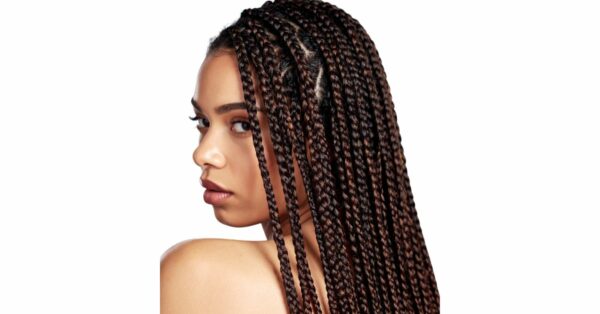
Braids can give you a break from daily styling. How they’re installed matters, especially around the front. If you’re going to a braider, ask for a loose base around the temples and leave out any short hairs that would have to be stretched to reach the braid. If you’re adding extensions, consider a lighter style so there’s less weight hanging from the roots.
Speak up as soon as a braid starts to sting or feel tight. It’s much easier to have that braid redone while you’re still in the chair.
4. A soft headband with your curls out
On days when you want your hair out of your face, try a soft fabric headband with your curls loose. Place it slightly behind the hairline if that feels more comfortable, and make sure it stays put without squeezing at the temples. A band that leaves you rubbing the sides of your head by lunchtime is one to switch out.
This is also a nice way to get another day out of a twist-out. Fluff the back and let the band do the styling up front.
5. A loose bun with a satin scrunchie
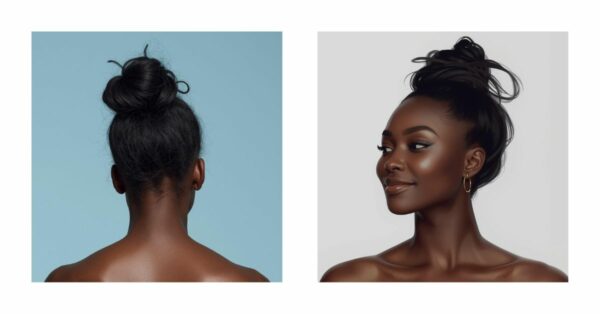
If you wear a bun for work or just like having your hair up, gather it at the nape, fold the ends into a loose bun, and secure it with a soft satin scrunchie. Here’s the part that’s easy to miss. Even a soft scrunchie can pull if you wrap it tightly. Stop when the bun feels secure enough, then ease up any section that tugs when you turn your head.
If a bun is your everyday style, vary where it sits or give yourself a loose-hair day when you can. It gives the same spots a break from being gathered day after day.

6. A twist-out or braid-out with loose roots
For a twist-out, twist small sections of hair, then undo them when they’re dry. A braid-out works the same way with braids. Around the front, keep the roots loose and let the twists fall in the direction your hair naturally wants to go. You can get definition through the lengths without tightening each section at the scalp.
If you like a little more definition, smooth a small amount of curl cream through damp sections before twisting or braiding. When you take the style down, gently separate the sections that open easily. You can leave a few curl clumps together if they want to stay that way.

Go easy on the edge control
If you enjoy a little edge control, start with a small amount where you want it. I’d skip the daily routine of brushing down the same little hairs and layering more product over yesterday’s. Some days, I’d just let those little curls be.

Give your hairline a break at night, too
Take out the claw clip or loosen the bun before bed. If you like a satin bonnet, choose one that sits comfortably without a tight band across your edges. A satin pillowcase is handy if your bonnet tends to wander off in the middle of the night. Speaking from experience, if you toss and turn a wee bit, that pillowcase will still be there in the morning!

Start with the style you wear most
If it’s a bun, try wearing it a little lower. If it’s braids, ask for more room at the hairline next time. See how your scalp feels at the end of the day. That’s a simple way to tell whether the change is worth keeping in your routine.
For more everyday habits, take a look at my edge care routine for Black hair. If you’re deciding what to use, my guide to edge care products covers oils, styling products, and accessories.
Which style do you reach for when you want to give your edges a break? I’d love to hear what works for you.